
Community · South-west Scotland
Dumfries and Galloway RAYNET
Volunteer radio communications for emergencies, community resilience and local events.
A CumbriaCQ introduction · Information checked
What is RAYNET?
Dumfries and Galloway RAYNET is a voluntary group that provides radio communications for emergencies and community events. Its members give their time, equipment and practical skills to help people pass information when extra communications support is needed.
RAYNET is the Radio Amateurs’ Emergency Network. Licensed amateur radio operators are central to its work, but the local group also welcomes enquiries from people who are not yet licensed. It is about teamwork and useful communications—not simply owning a radio.
DG RAYNET works across Dumfries and Galloway in south-west Scotland and cooperates with other groups in Scotland and elsewhere in the UK. This page introduces the group; DG RAYNET’s own website is the place for current group information.
Find out about joining DG RAYNET ↗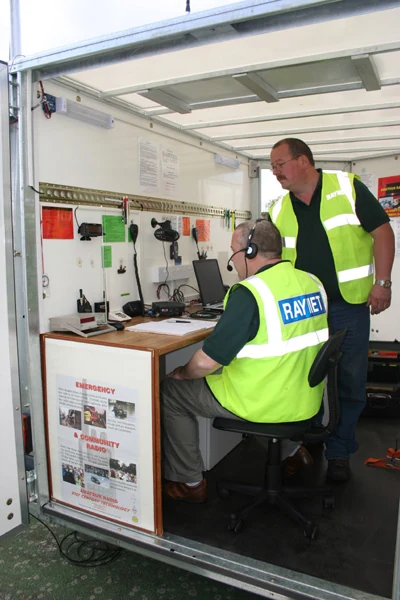
What does Dumfries and Galloway RAYNET do?
Emergency communications
Helps link people and locations when an incident creates a need for additional radio communications. This can support coordination between community resilience teams, voluntary organisations and responding services.
Community event support
Provides safety-related communications at events such as rallies, mountain-bike events, marathons, triathlons and sponsored walks, linking operators around a course with event control.
Training and teamwork
Uses regular exercises and events to practise setting up equipment, operating a controlled radio network and passing clear, accurate messages.
The group describes its capabilities as including HF, VHF and UHF radio, analogue and digital communications, temporary repeaters and antennas, and mobile power. The equipment and network used depend on the location, terrain and task.
In an emergency, call 999 or 112. RAYNET supports communications; it is not a replacement for the emergency services or a public emergency-call service. Coverage, volunteer availability and deployment times depend on circumstances.
Who can RAYNET support?
DG RAYNET’s introduction lists a range of organisations and “user services” that may need communications for emergency or safety purposes. These include the Red Cross, St Andrew’s, the Scottish Ambulance Service, HM Coastguard, the Salvation Army, emergency planners, police, the Armed Forces, community resilience groups and public utilities.
Support is arranged for each task and follows current licence conditions.
Why local events matter
Event work gives volunteers practical experience before an emergency happens. An operator at a remote checkpoint may need to relay a message to event control, keep a record of what was said or help another station establish a usable radio link.
The group’s website reports communications support for Kirroughtree events near Newton Stewart and the Beltie Triathlon around Loch Ken and Crossmichael in 2026. These local events put communication skills into practice.
Local history and community resilience
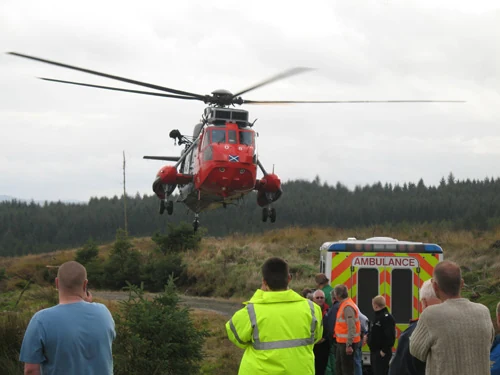
According to the group’s published history, Dumfries and Galloway RAYNET was founded in 1986 after a local forest fire highlighted the value of a radio link for volunteers supporting firefighters.
The group also records a callout during the Newton Stewart flooding on 30 December 2015. It provided a radio link between the rest centre in Newton Stewart and the emergency-planning radio room in Dumfries, using GB3DG, after local telephone and internet services were disrupted. Read the group’s own account and history for the full context.
GB3DG and the daily radio net
DG RAYNET advertises an open net on GB3DG at 12 noon each day, with licensed amateurs joining from Dumfries and Galloway and Cumbria. A net is an organised on-air gathering, led by a control station, where operators take turns and keep in touch.
Check the official net information for changes. You must hold the appropriate amateur-radio licence to transmit, and being within the wider region does not guarantee repeater coverage. Our GB3DG repeater page provides further local information; always check current keeper-published access details.
Interested in joining or arranging event communications?
The group welcomes new members. Its website explicitly says you do not have to be a licensed radio amateur to join. Contact DG RAYNET to ask about membership, training and suitable ways to help; joining does not itself give permission to transmit.
If you organise a local event, discuss your communications needs with the group in advance. Volunteer support and any arrangements need to be agreed directly with DG RAYNET.
Contact Dumfries and Galloway RAYNET ↗This link opens the group’s official contact section. CumbriaCQ does not take membership applications or emergency callouts on its behalf.
Related local radio and preparedness information
Sources and photographs
This independent CumbriaCQ introduction is based on information supplied for the page and the official Dumfries and Galloway RAYNET website, checked on 15 November 2026. See its history, daily net and contact information.
The three photographs were supplied for this page. Current operational arrangements, membership details and event availability should be confirmed directly with the group.